Pressure Washing in Savannah, GA

Hot water at 200°F for driveways, walkways, dumpster pads, and enclosures — with the runoff captured, not drained.

Savannah grows things on concrete. Between 49 inches of rain a year, constant humidity, and live oaks dropping tannin onto every surface below them, driveways and walkways here go green and black faster than almost anywhere.

Our pressure washing in Savannah, GA runs hot — roughly 200°F — because heat breaks down the biological film that cold water leaves behind. That’s the difference between concrete that stays clean for a season and concrete that’s green again by next month. Call (912) 461-3265 for a quote.

Updated August 2026

hot water pressure washing driveway in Savannah GA

What Do You Pressure Wash in Savannah?

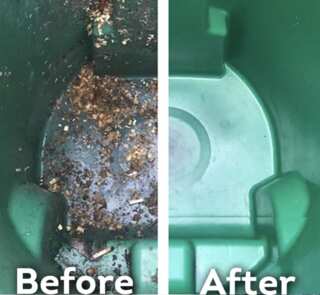
The same truck that cleans bins carries hot water at pressure, and that turns out to be exactly what Savannah’s concrete needs. We use it for driveways, sidewalks, patios, dumpster pads, trash enclosures, and the concrete around commercial back-of-house areas.

Hot water matters more here than most people realize. Cold-water pressure washing strips loose dirt but leaves the biological film behind — and in Savannah, that film is the problem. Heat breaks down the organic material that algae and mildew grow in, so the surface stays clean noticeably longer before it comes back.

For businesses this often pairs naturally with dumpster service. The pad under a dumpster collects leaked grease and liquid waste, and cleaning the container while leaving the pad means the smell doesn’t actually go away.

What Are We Actually Removing?

Savannah’s climate produces a specific set of problems on concrete.

Algae and Green Mildew

Over 49 inches of rain a year and constant humidity mean concrete here grows a green-black biological layer, worst on shaded north sides and anywhere under live oaks.

Live Oak Tannin Stains

The trees Savannah is known for drop leaves and pollen that leach dark tannin into concrete. Those stains set in and don’t rinse off with a hose.

Grease Around Dumpster Pads

Leaked liquid from commercial containers soaks into the pad and keeps producing odor after the dumpster itself has been cleaned.

Rust and Irrigation Staining

Well and irrigation water leaves orange staining on driveways and walkways across the outlying areas.

Slip Hazards on Walkways

Algae on a wet sidewalk is genuinely slick. On a commercial property that’s a liability exposure, not just an appearance issue.

Gum, Spills, and Traffic Film

Entryways and sidewalks at customer-facing businesses accumulate a gray film that reads as neglect long before anyone consciously notices it.

What Does Pressure Washing Cost in Savannah?

Residential driveways and walkways generally run $0.15 to $0.35 per square foot, which puts a typical Savannah driveway somewhere around $120 to $300 depending on size and how bad it has gotten.

Commercial work — dumpster pads, enclosures, back-of-house concrete, storefront sidewalks — is usually quoted per visit rather than per foot, because it’s a defined area on a repeating schedule. Bundling it with dumpster cleaning on the same visit costs less than booking the two separately, since the equipment is already there and running.

The condition matters as much as the size. Concrete that has gone five years without attention under Savannah live oaks takes multiple passes and more dwell time than a driveway washed last spring.

How Often Should Savannah Concrete Be Washed?

Once a year handles most residential driveways here. Shaded areas under trees, north-facing walkways, and anything that stays damp usually want twice a year, because that’s where the algae comes back fastest.

Commercial dumpster pads and enclosures are a different rhythm entirely — quarterly at minimum for food-service properties, and monthly for anywhere with real grease volume, ideally on the same visit as the dumpster itself.

Late winter into spring is the best window for annual residential work. You’re clearing a full season of accumulation before the humid months, and the surface goes into summer clean rather than already colonized.

Same containment rules apply as with our bin work: wash water is captured rather than sent into the storm drain, which in Savannah discharges toward the river and the marshes.
Frequently Asked Questions

Do you use hot water or cold?

Hot, at roughly 200°F. That’s the meaningful difference in Savannah specifically. Cold water at pressure removes visible dirt but leaves the biological film that algae and mildew regrow from, so it comes back quickly. Heat breaks down that organic layer, which is why hot-water washing stays clean noticeably longer here.

Will pressure washing damage my concrete or pavers?

Not when the pressure and nozzle are matched to the surface. Concrete driveways handle high pressure fine. Pavers, older brick, and softer surfaces need lower pressure and a wider fan pattern, because too much force will erode joint sand and pit the material. We adjust per surface rather than running one setting across everything.

Can you remove the black streaks under my live oaks?

Usually most of them. The dark staining from live oak leaf and pollen tannin is one of the most common calls we get in Savannah. Hot water plus the right cleaning solution lifts the majority of it, though concrete that has sat stained for many years sometimes keeps a faint shadow. We’ll tell you what to expect after looking at it rather than promising a result we can’t deliver.

Do you clean dumpster pads and trash enclosures?

Yes, and it’s one of the more useful things we do for commercial customers. Cleaning a dumpster while leaving the grease-soaked pad underneath means the smell doesn’t actually go away. Doing both on one visit costs less than scheduling them separately, since the truck is already on site.

Where does the runoff go?

It’s captured and disposed of properly, not sent into the storm drain. This is the same containment system we use for bin and dumpster cleaning. It matters in Savannah because storm drains here discharge toward the river and surrounding marshes rather than to a treatment plant, and commercial properties can be cited for uncontained wash water.

How often should I pressure wash my Savannah driveway?

Once a year suits most driveways. Anything shaded, north-facing, or sitting under trees usually wants twice a year, since those surfaces regrow algae fastest in this humidity. Late winter into early spring is the ideal window — you clear a season of buildup before the humid months rather than after.

Ready to Get Your Concrete Back?

Driveways, walkways, patios, and commercial pads. Bundle it with dumpster service and it costs less than booking separately.

Call (912) 461-3265